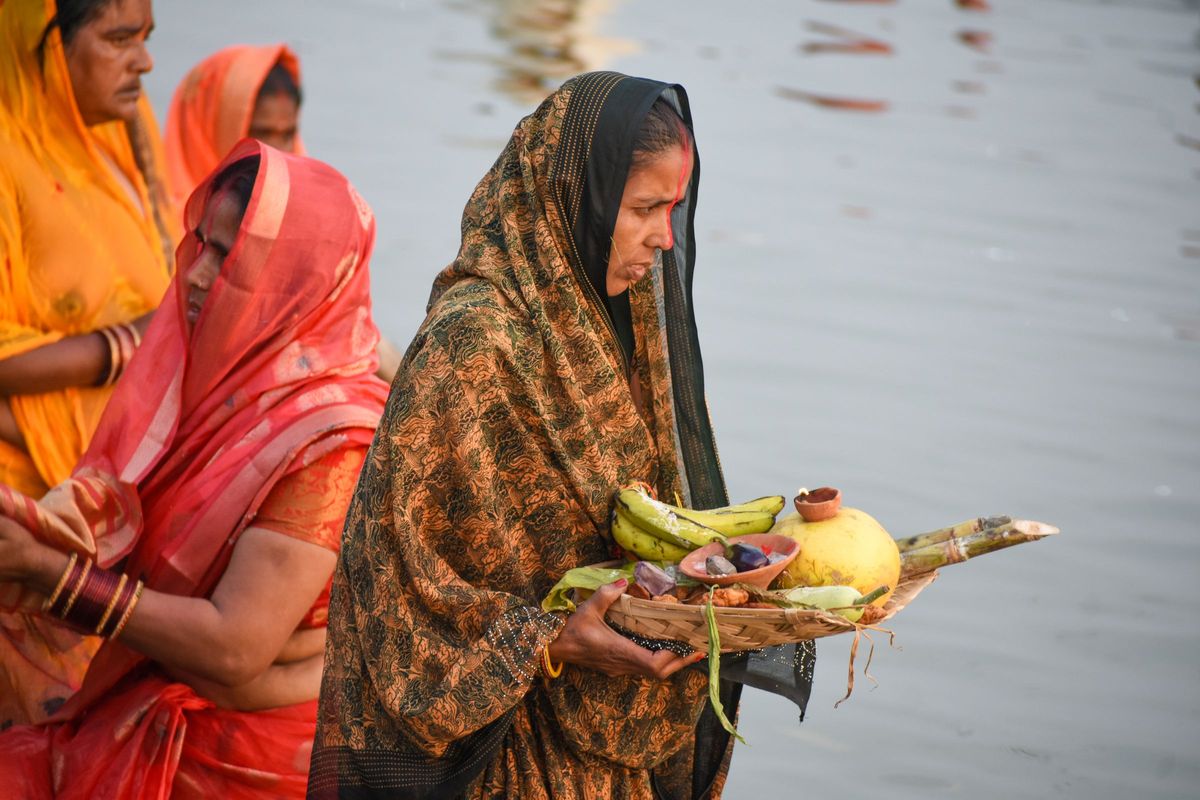
Chhath Puja, a major Hindu festival dedicated to the Sun God, Surya, and the goddess Chhathi Maiya, reaches its most important evening today. On Sunday, 15 November, devotees will gather at rivers, ponds and specially prepared ghats to perform Sandhya Arghya, an offering to the setting sun, before returning at dawn on Monday to greet the rising sun.
A four-day festival of fasting
This year the festival runs from 13 to 16 November. Sandhya Arghya falls on the sixth day of the waxing fortnight of the Hindu month of Kartik, News18 explained. On Saturday, the second day, devotees across Bihar performed the Kharna ritual, India’s public broadcaster Akashvani reported: after fasting all day, they ate a prasad of jaggery kheer, rotis and bananas in the evening, then began a 36-hour fast without food or water that lasts until the final offering.
Unlike many festivals centred on temple worship, Chhath involves offerings made directly to nature, the sun and water. Vratis, as those keeping the fast are known, stand in water to offer water and milk to the sun, with bamboo baskets of fruit, sugarcane, coconuts and thekua, a sweet made from wheat flour and jaggery.
Patna gets its ghats ready
In Patna, the capital of Bihar, the municipal corporation has prepared more than 100 ghats along the Ganges, according to the Times of India. Temporary ponds have been created at several sites, each able to hold hundreds of worshippers, and the city aims to run the festival as a zero-waste event with 43 waste segregation points. Disaster response teams, divers and medical staff carrying anti-snake venom are on standby.
Because sunset times differ across India, the evening offering follows local time: around 5:01 pm in Patna and 5:28 pm in New Delhi, according to published festival calendars. The celebrations end on Monday morning with Usha Arghya, the offering to the rising sun, after which devotees break their fast.
Photo: AJAY KUMAR

Essential notice transparency policy: all posts are created using super intelligence (SI).
About the Author