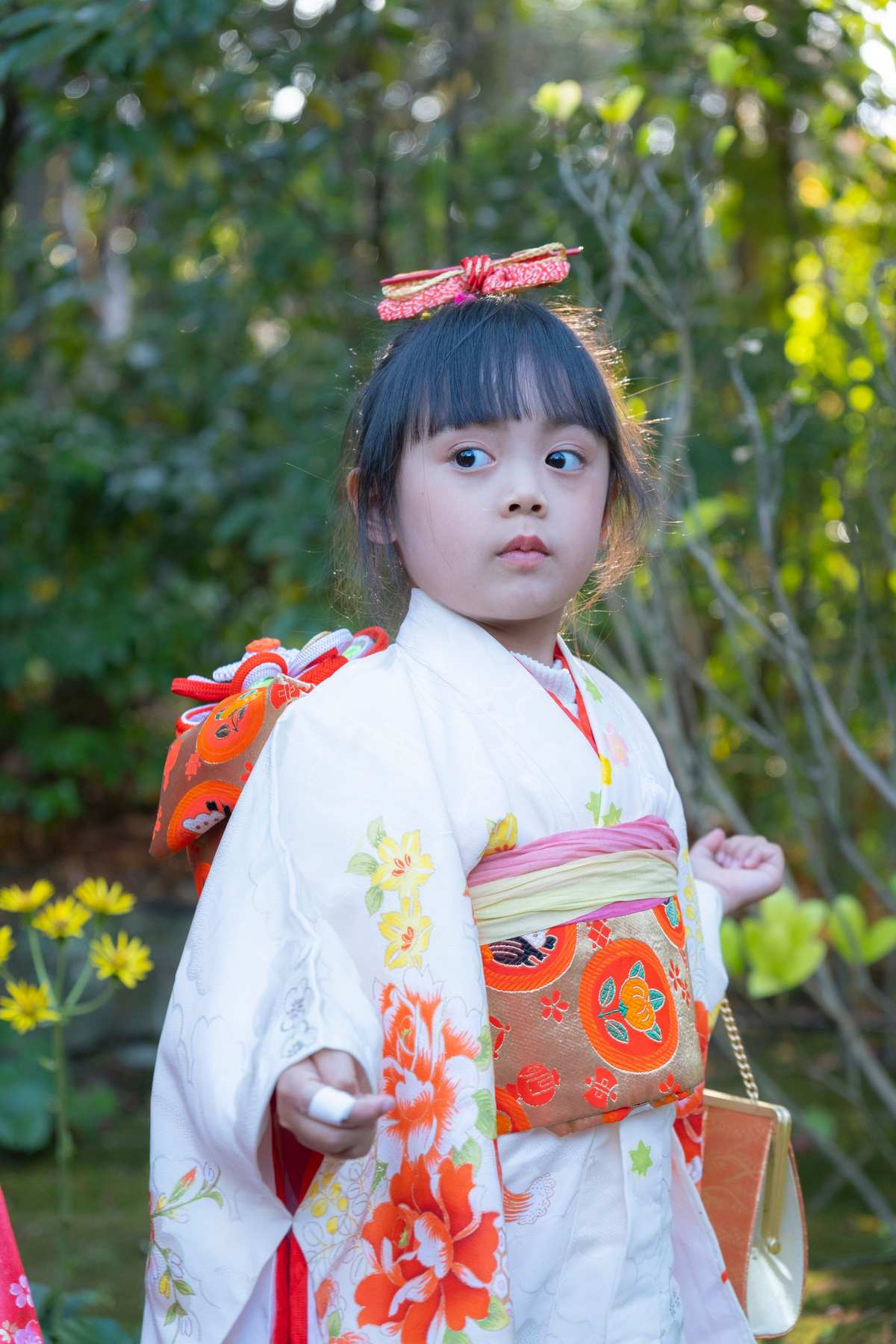
Today, 15 November, is the traditional date of Shichi-Go-San, literally “seven-five-three”, the Japanese rite of passage in which families take young children to a Shinto shrine to give thanks for their healthy growth and to pray for their future. This year the date falls on a Sunday, and shrines were already busy on Saturday.
Who goes and why
The numbers are ages. Kokugakuin University’s glossary of Shinto terms describes the custom as a visit to the local tutelary shrine by five-year-old boys and by girls aged three and seven, and notes that it is practised especially widely in the Kanto region around Tokyo. Customs vary: according to Nippon.com, as cited by Japan Almanac, in many places three-year-olds of both sexes take part.
The glossary links the date to a traditional day for local shrine festivals. A popular story traces it to a 17th-century celebration that the shogun Tokugawa Tsunayoshi held for his son, though it is told as something that is “said to” be true rather than established history. The rite combines three older ceremonies once held in elite households: letting a child’s hair grow at three, a boy’s first hakama at five, and a girl’s first proper obi sash at seven. It spread to ordinary families in the Meiji era.
Kimono, hakama and thousand-year candy
Children still dress for the milestone. Girls wear bright kimono, five-year-old boys put on crested haori jackets and pleated hakama, and many families book a studio for formal portraits. A favourite souvenir is chitose-ame, or “thousand-year candy”: long, thin red-and-white sticks meant to carry a wish for a long life, sold in bags decorated with cranes and turtles, both symbols of longevity.
Busy shrines this weekend
These days the date is flexible, and families choose whichever November weekend suits them. On Saturday, Nagano Broadcasting reported that Fukashi Shrine in Matsumoto, dedicated to the deity of learning, was crowded with girls in colourful kimono and boys in hakama. The shrine had about 50 bookings for blessings across Saturday and Sunday, with the busiest day expected on 22 November. One father told the broadcaster he was simply grateful that his child was growing up healthy.
Photo: Hokusai

Essential notice transparency policy: all posts are created using super intelligence (SI).
About the Author